Bird welfare law around the world
What is legally required for a companion bird depends heavily on where the bird lives. This explorer separates legislation, enforceable standards, codes and official guidance so very different systems are not presented as equivalent.
Research tool, not legal advice. Laws change. The sources were checked on 5 October 2026, with limits noted below. This is not an exhaustive legal review. Campaign links are further reading, not verified current action alerts.
Explore the map
Tap a dot on the map, or choose a place by name below. The named controls provide the same interaction without relying on geography.
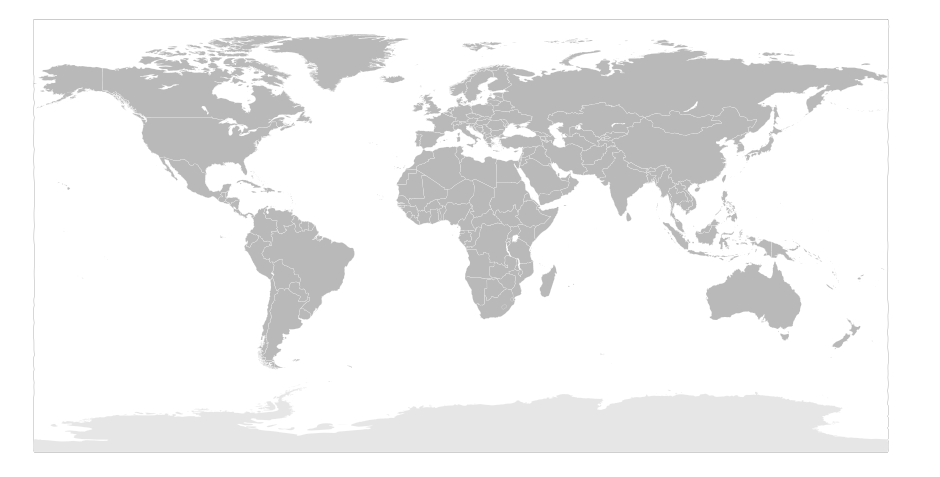
Map: John Harvey and contributors, derived from CIA World Factbook mapping. Source and public-domain dedication. Optimised for local delivery; borders are illustrative, not a current legal reference.

What do the labels mean?
A legal requirement.
A formal code or minimum standard; legal effect varies.
Information needed for a fair comparison.
No specific rule identified in this review. Other law may still apply.
Places explored
Open a place to see its law, bird-specific requirements, advocacy links together.
Oceania Australia Federal system Varies by jurisdiction bird specificity
At a glance
National framework; state and territory welfare law
- States and territories make and enforce welfare law
- Australian Government leads on trade and national coordination
- Companion-bird rules must be checked regionally
Australia should not be treated as one companion-bird legal jurisdiction. State and territory governments have primary responsibility for animal-welfare legislation and enforcement, while the Australian Government has narrower responsibilities including trade, treaties and national coordination.
Choose a state or territory
Animal-welfare law is primarily state and territory based. The titles below match the DAFF jurisdiction index checked on 5 October 2026. Detailed bird-specific and commencement checks remain pending for all eight jurisdictions.
WA Western Australia Titles checked
Legislation titles in the DAFF index: Animal Welfare Act 2002; Animal Welfare (General) Regulations 2003
This is a legislation-title check, not an exhaustive review of bird-specific rules. Wildlife licensing and biosecurity restrictions may also apply.
Official regional source →NSW New South Wales Titles checked
Legislation titles in the DAFF index: Prevention of Cruelty to Animals Act 1979; Prevention of Cruelty to Animals Regulation 2025
Bird-specific review pending. Legislation title sourced from the Australian Government jurisdiction index.
VIC Victoria Titles checked
Legislation titles in the DAFF index: Prevention of Cruelty to Animals Act 1986; Prevention of Cruelty to Animals Regulations 2019
Bird-specific review pending. Legislation title sourced from the Australian Government jurisdiction index.
QLD Queensland Titles checked
Legislation titles in the DAFF index: Animal Care and Protection Act 2001; Animal Care and Protection Regulation 2023
Bird-specific review pending. Legislation title sourced from the Australian Government jurisdiction index.
SA South Australia Titles checked
Legislation titles in the DAFF index: Animal Welfare Act 1985; Animal Welfare Regulations 2012
Bird-specific review pending. Legislation title sourced from the Australian Government jurisdiction index.
TAS Tasmania Titles checked
Legislation titles in the DAFF index: Animal Welfare Act 1993; Animal Welfare (General) Regulations (No. 2) 2023
Bird-specific review pending. Legislation title sourced from the Australian Government jurisdiction index.
ACT Australian Capital Territory Titles checked
Legislation titles in the DAFF index: Animal Welfare Act 1992; Animal Welfare Regulation 2001
Bird-specific review pending. Legislation title sourced from the Australian Government jurisdiction index.
NT Northern Territory Titles checked
Legislation titles in the DAFF index: Animal Protection Act 2018; Animal Protection Regulations 2022
Bird-specific review pending. Legislation title sourced from the Australian Government jurisdiction index.
What the rules cover
- Who makes welfare law? Law
- Primary legislative responsibility rests with state and territory governments.
- National role Context
- The Australian Government leads on matters including trade and international agreements and national animal-welfare coordination.
- Companion birds Context
- The applicable everyday welfare rules need to be checked in the state or territory where the bird is kept.
Advocacy and action
Visit the linked organisation for its published positions. Current campaign activity has not been independently verified in this audit.
Check the organisation’s current information and action requests before sharing or taking part.
See current RSPCA Australia advocacy →Linked as a relevant advocacy organisation; this is not an endorsement of every position it holds.
United Kingdom England Duty of care General bird specificity
At a glance
Statutory duty of care
- Environment and diet
- Normal behaviour
- Social housing needs
The Animal Welfare Act 2006 creates a duty to meet an animal’s needs, including environment, diet, normal behaviour, social housing where relevant, and protection from suffering and disease.
What the rules cover
- Suitable environment Law
- Part of the statutory welfare duty.
- Normal behaviour Law
- The duty includes the need to exhibit normal behaviour patterns.
- Social needs Law
- The duty includes any need to be housed with, or apart from, other animals.
Advocacy and action
Visit the linked organisation for its published positions. Current campaign activity has not been independently verified in this audit.
Check the organisation’s current information and action requests before sharing or taking part.
Ways to help through World Parrot Trust →Linked as a relevant advocacy organisation; this is not an endorsement of every position it holds.
Aotearoa New Zealand New Zealand Act + codes Context-specific bird specificity
At a glance
Act + welfare codes
- Minimum standards
- Recommended best practice
- Bird rules in some contexts
The Animal Welfare Act 1999 is supported by codes of welfare. Minimum standards in relevant codes can be used as evidence in enforcement; recommended best practice goes beyond those minimums.
What the rules cover
- Codes of welfare Code
- Codes sit under the Act and contain minimum standards plus recommended best practice.
- Temporary housing Code
- The companion-animal temporary-housing code covers facilities including pet shops, welfare centres and boarding establishments.
- Bird facilities Code
- That code includes bird-specific requirements such as sufficient perches and facilities that allow normal behaviour.
Advocacy and action
Visit the linked organisation for its published positions. Current campaign activity has not been independently verified in this audit.
Check the organisation’s current information and action requests before sharing or taking part.
Read SPCA’s companion-animal code information →Linked as a relevant advocacy organisation; this is not an endorsement of every position it holds.
Europe Switzerland Species-specific rules Detailed bird specificity
At a glance
Species-specific legal requirements
- Conspecific social contact
- No solitary keeping
- Minimum enclosure rules
Swiss federal animal-welfare rules include explicit requirements for exotic birds. Official guidance states that budgies, canaries and parrots need conspecific social contact and that solitary keeping is prohibited.
What the rules cover
- Social contact Law
- Budgerigars, canaries and parrots require contact with their own kind; humans are not treated as a substitute.
- Solitary keeping Law
- Official federal guidance states solitary keeping is prohibited.
- Space Context
- Legal dimensions are minimums. More space and flight opportunities are recommendations in the federal guidance.
Advocacy and action
Swiss Animal Protection SAP / Schweizer Tierschutz STS
Visit the linked organisation for its published positions. Current campaign activity has not been independently verified in this audit.
Check the organisation’s current information and action requests before sharing or taking part.
Read STS bird-welfare demands →Linked as a relevant advocacy organisation; this is not an endorsement of every position it holds.
Europe Germany Law + expert guidance Detailed guidance bird specificity
At a glance
General law + expert husbandry guidance
- Detailed bird husbandry guidance
- Minimum enclosure dimensions
- Pair/group principles for parrots
Germany combines general animal-welfare law with federal expert reports describing minimum husbandry requirements for groups including small birds and parrots. The reports are important interpretive guidance, but are not the same thing as legislation.
What the rules cover
- Small-bird housing Context
- Federal expert guidance sets minimum enclosure dimensions by bird group and describes flight, perches, bathing and shelter.
- Parrot social housing Context
- Federal parrot guidance says parrots generally live in pairs or groups and should generally be kept that way, subject to stated exceptions.
- Legal status Context
- These expert reports help interpret welfare expectations; they should not be labelled as standalone statutory law.
Advocacy and action
Visit the linked organisation for its published positions. Current campaign activity has not been independently verified in this audit.
Check the organisation’s current information and action requests before sharing or taking part.
Read its budgie welfare guidance →Linked as a relevant advocacy organisation; this is not an endorsement of every position it holds.
Southeast Asia Singapore Law + codes + licensing Detailed in trade contexts bird specificity
At a glance
Duty of care + welfare codes + licensing
- Statutory duty of care
- Pet-owner welfare code
- Bird-specific pet-shop licence conditions
Singapore combines a statutory duty of care with Codes of Animal Welfare and licensing conditions. The AVS page checked on 5 October 2026 describes an ongoing review of the codes.
What the rules cover
- Duty of care Law
- The Animals and Birds Act includes a duty of care for animal owners.
- Pet-owner code Code
- The Code specifies minimum standards for animal housing, management and care.
- Bird retail Law
- Licensed pet shops have bird-specific conditions covering welfare, housing and care.
Advocacy and action
Visit the linked organisation for its published positions. Current campaign activity has not been independently verified in this audit.
Check the organisation’s current information and action requests before sharing or taking part.
See ACRES bird and wildlife-trade work →Linked as a relevant advocacy organisation; this is not an endorsement of every position it holds.
East Asia Hong Kong Cruelty law + licensing Trade-specific bird specificity
At a glance
Cruelty law + licensed-trade standards
- Cruelty and neglect offences
- Animal-trader licensing
- Check current law and licensing scope
Hong Kong’s current framework centres on preventing cruelty, while licensed animal traders have additional standards. This summary does not establish the current status of proposed duty-of-care reforms.
What the rules cover
- Cruelty law Law
- Cap. 169 prohibits unnecessary suffering, including serious neglect.
- Bird sales Law
- Commercial animal and bird traders generally require an Animal Trader Licence, with standards for licensed premises.
- Scope Context
- Licensing rules have exceptions, including some sales of personally kept pets. Check the AFCD trading guidance for the relevant activity.
Advocacy and action
Visit the linked organisation for its published positions. Current campaign activity has not been independently verified in this audit.
Check the organisation’s current information and action requests before sharing or taking part.
See SPCA Hong Kong legislative advocacy →Linked as a relevant advocacy organisation; this is not an endorsement of every position it holds.
Europe Netherlands Positive-list approach Developing bird specificity
At a glance
General welfare rules + positive-list policy
- Mammal positive list already in force
- Bird list planned
- No implementation date yet
The Netherlands restricts mammal keeping, sale and breeding through a positive list, with transitional provisions. The government says it also plans lists for birds, reptiles and amphibians, but has not announced when the bird list will take effect.
What the rules cover
- Current positive list Law
- The national positive list applies to mammals; transitional exceptions apply to some animals already held on 1 July 2024.
- Birds Context
- Government states that a comparable list for birds is planned.
- Status Gap
- No implementation date for the bird list is currently announced on the government page.
Advocacy and action
Visit the linked organisation for its published positions. Current campaign activity has not been independently verified in this audit.
Check the organisation’s current information and action requests before sharing or taking part.
See the campaign for a bird positive list →Linked as a relevant advocacy organisation; this is not an endorsement of every position it holds.
North America United States Federal regulated-activity standards Detailed but limited scope bird specificity
At a glance
Federal standards for regulated bird activities
- Federal bird standards since 2023
- Applies to regulated entities
- Not a general private pet-care code
USDA bird standards under the Animal Welfare Act took effect for regulated licensees and registrants in 2023–24. Coverage depends on the activity and entity, so the federal rules should not be read as a universal companion-bird husbandry law for private homes.
What the rules cover
- Federal standards Law
- USDA established humane handling, care, treatment and transport standards for birds covered by the Animal Welfare Act.
- Who may be covered Law
- Dealers, exhibitors, commercial transporters and research facilities may require licensing or registration depending on activity.
- Scope matters Context
- Coverage and exemptions are complex; private pet ownership is not equivalent to a regulated AWA facility.
Advocacy and action
Visit the linked organisation for its published positions. Current campaign activity has not been independently verified in this audit.
Check the organisation’s current information and action requests before sharing or taking part.
Read about the federal bird standards and remaining gaps →Linked as a relevant advocacy organisation; this is not an endorsement of every position it holds.
United States California State layer Context-specific bird specificity
At a glance
State retail-care + restricted-species rules
- Pet-store animal-care standards
- Bird cage requirement in retail
- Restricted-species rules
California adds state rules on top of US federal law. Pet-store animal-care requirements include bird-relevant enclosure standards, while wildlife rules restrict possession of some species; check the CDFW list and permit rules.
What the rules cover
- Retail pet stores Law
- California’s Pet Store Animal Care Act establishes minimum care standards for animals sold in retail stores.
- Bird enclosures in stores Law
- Health and Safety Code section 122352(c) addresses full wing extension and appropriate perches in retail-store primary enclosures. A secondary statute reproduction was checked; confirm the current official text before relying on it.
- Restricted species Law
- California separately regulates restricted wildlife; a restricted-species permit may be necessary. Check the current CDFW species list before acquiring or moving a bird.
Advocacy and action
Visit the linked organisation for its published positions. Current campaign activity has not been independently verified in this audit.
Check the organisation’s current information and action requests before sharing or taking part.
Explore ALDF local advocacy resources →Linked as a relevant advocacy organisation; this is not an endorsement of every position it holds.
The gap can matter as much as the rule.
Can prohibit cruelty without spelling out everyday bird husbandry.
Can directly address social contact, space or other bird needs.
Neither label is a welfare score. The explorer shows what each system actually regulates.